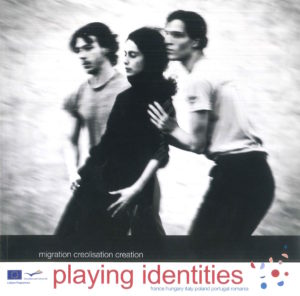
"Playing Identities". The Project
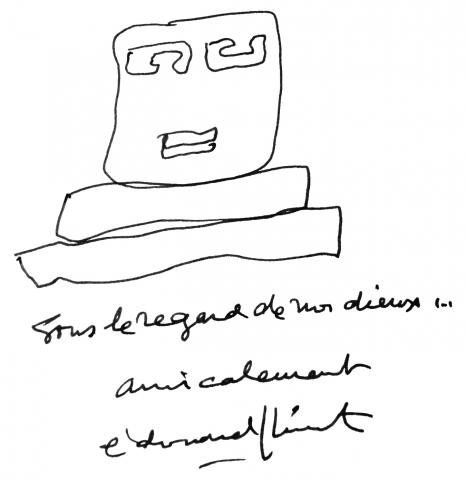
“Le «Tout-Monde», c’est le monde actuel tel qu’il est dans sa diversité et dans son chaos.
Pour moi, le chaos n’est pas seulement le désordre, mais c’est aussi l’impossibilité de prévoir et de régir le monde.
La relation signifie un rapport de transversalité et non pas de causes à effets”
Edouard Glissant
This project aims to interpret migration phenomena as instances of creolization.
The original aspect of this project stands in the intuition of borrowing Glissant's poetical vision of creolisation and to apply it to two distinct processes of creation.
- On one side we choose Performing Arts, namely theatre, in order to produce a play in which artists from diverse theatrical backgrounds are forced to the negotiation of expressive codes, practices and meanings. Therefore, the 'creolization' of theatrical practices becomes an essential element of the play itself.
- On the other side, we choose Methodological Sets in Social Sciences and Humanities in order to develop new conceptual tools and an integrated framework for the analysis of migration phenomena by seeking a deep exchange among diverse theoretical and methodological backgrounds. By pairing the features of the two processes of creation - the first understood as an intercultural constitution of identity, the second as an interdisciplinary elaboration of analytic methodology - we expect to indicate the potentialities of a creolized approach to a better grasping of intercultural dynamics and so favour the European cultural and social integration.
THE CONCEPT OF CREOLISATION
The EU project “Playing Identities: Migration, Creolization, Creation” aims at testing in theatrical practice the concept of “creolization”, that is, the process through which something becomes “creole”.
As developed first in linguistics and social anthropology, the idea of creolization deals with cultural problems of communication. The development of creole languages takes place within a context of contact and interaction between different cultures, communities or social groups, which are characterised by differences of economic and political status. Creole languages create both the syntax and a grammar which are autonomous from those of the original languages.
Creolization pertains to the way a subaltern culture mixes and re-contextualises the pre-existing codes belonging to the dominant culture with which it is in contact. A creole culture is often born around social, political and cultural claims. Thus, the processes of creolization deal with the construction of an individual or group identity. Migration contexts are the most likely sites for creolization to occur, as in these contexts the necessity to develop a shared code of exchange arises. The processes of creolization are opposite to so called “processes of integration”. The processes of integration, in fact, aim to gain control over the phenomena of social contact; they attempt to impose standardisation in order to create equivalence between comparable terms belonging to different cultural systems. Creolization, on the contrary, displays the striving for translatability, showing the traces and the signs of the cultural distances and the identities through which the creole object or person has passed. Creolization does not have a defined goal: it is the outcome of a never-ending process of strategic interaction.
Artistic creation is a suitable site for reproducing a creolization process, inasmuch as it aims to establish means of expression that reorganise or reinterpret the rules of previous creative acts. Yet, under the conditions of creolization, “creativity” is not a quality of the artist’s vision, but a quality produced by the process itself. In this project, the artistic idea will need to “migrate” through different EU countries, adapting and changing as it progresses.
In such a context, two moments of artistic creolization are at work. The first is in the process of creation where the author engages with his or her new environment. The second moment is the moment of performance and the change of perspective that this provokes in its audience.
Artistic creation is always a “creole” procedure, in so far as it rearranges the expressive means in an unexpected order. In the process of theatrical creation we are proposing, each intervention of the performers intermingles with the artist’s process, gradually hiding and erasing the marks of his/her original artistic identity. The role of the director/core team to be appointed will not be that of imposing his/her “artistic vision”, but of of mediating between his/her first idea, the other performers’ ideas and the local conditions. The “artist” should not aim to “be creative”, but to acclimatise to local conditions and to engage with the host environment. Thus, the creole theatrical performance is to be thought of as something concerning the procedures of staging in addition to the content of what is staged.
As we consider the meaning of creolization in theatrical practice, we should imagine something which challenges the institutional or received forms of theatrical language, and involves the audience as participants in negotiating meaning. It should aim to affect the relation between the scene and the audience, insofar as to provoke an exchange across cultures and a change in the audience’s understanding.
In “Playing Identities” we hope to enable identities to change as they are played.